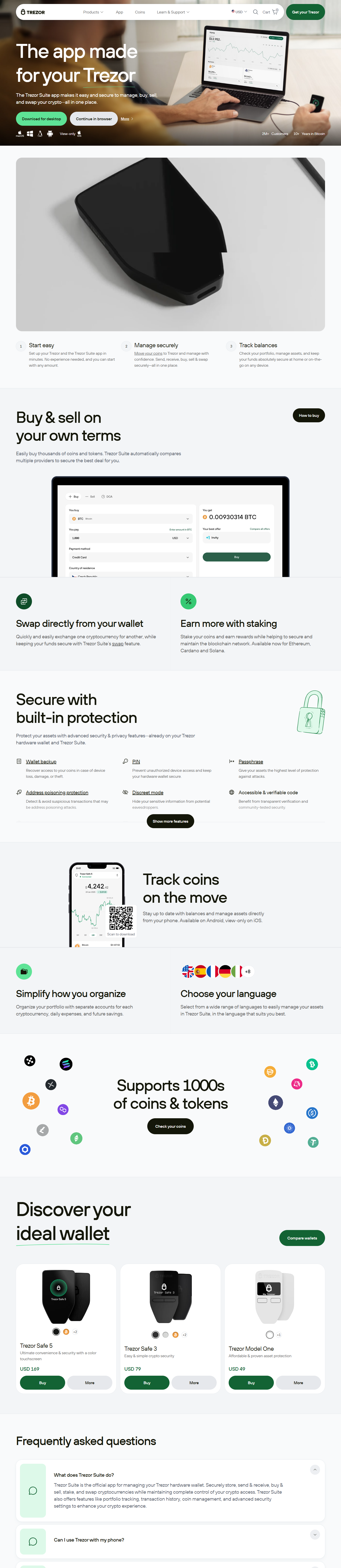
Trézor Suite Software – A Modern Guide to Secure Crypto Control
Introduction
Trézor Suite is the official software environment created to support Trezor® hardware wallets. It allows users to manage cryptocurrency while keeping ownership fully in their hands. Instead of trusting third-party platforms, users rely on their own device to authorize every action.
This guide explains Trézor Suite from a practical point of view. It focuses on how the software fits into everyday crypto use, how it protects assets, and how users can avoid common security mistakes.
The Idea Behind Trézor Suite
Trézor Suite exists to support true ownership. Many crypto tools focus on convenience first, often at the cost of security. Trézor Suite takes the opposite approach.
It removes unnecessary features, avoids account creation, and refuses to store private information. The result is a clean, focused tool built around user control rather than centralized access.
What Trézor Suite Does Not Do
Trézor Suite does not hold funds.
It does not store private keys.
It does not recover passwords or accounts.
These limitations are intentional. The software is designed to reduce trust in external systems and shift responsibility directly to the user and their hardware wallet.
How the Software and Device Work Together
The hardware wallet generates and stores private keys securely. Trézor Suite communicates with the device to display balances, prepare transactions, and show account activity.
When a transaction is created, the software sends it to the device for approval. Without physical confirmation on the device, nothing happens. This separation is the core of the security model.
Desktop vs Browser Experience
Users can choose how they want to access Trézor Suite.
The desktop version runs directly on the computer and is recommended for regular use. It offers stability and reduces dependency on browsers.
The browser version offers flexibility and works well on trusted machines. Security remains the same because the device must approve all actions.
Before You Start: Setup Mindset
Wallet setup is not something to rush. Users should approach the process calmly and with full attention.
A quiet environment, a trusted computer, and offline storage materials are essential. Mistakes made during setup can be permanent, so preparation matters.
First Connection to the Device
When the Trezor device is connected, Trézor Suite immediately checks its status. The software identifies whether the device is new or already initialized.
Clear instructions guide the user through each step, reducing confusion and lowering the chance of error.
Locking the Device with a PIN
A PIN code adds a strong layer of physical security. Even if someone finds the device, they cannot access it without the correct PIN.
The PIN is entered using the device interface itself, which prevents exposure to compromised computers.
Recovery Phrase: Ownership in Words
During setup, the device generates a recovery phrase. This phrase represents full ownership of the wallet.
Anyone who has this phrase can restore the wallet and move funds. Losing it means losing access permanently. This makes recovery phrase protection the most important responsibility for any user.
Correct Recovery Phrase Storage
The recovery phrase should only exist on paper or another offline medium. Digital copies increase risk dramatically.
It should be stored where only the owner can access it. Sharing or uploading the phrase defeats the purpose of using a hardware wallet.
Account Creation and Organization
After setup, users can add accounts for different cryptocurrencies. Each account has its own balance and transaction history.
This structure allows users to organize funds logically, such as separating savings from spending or isolating different investment strategies.
Understanding the Dashboard
The dashboard provides a simple overview of wallet activity. Users can see balances, recent transactions, and confirmation status.
The data is pulled from blockchain networks in real time and is never stored permanently by the software.
Receiving Crypto with Confidence
When receiving funds, Trézor Suite generates a wallet address. The address is displayed both on the computer and on the hardware wallet.
Confirming that both addresses match protects against malware that attempts to replace addresses silently.
Sending Transactions Safely
To send crypto, users enter transaction details in Trézor Suite. Before the transaction is broadcast, the device shows the amount, destination, and fee.
Only after physical confirmation does the transaction proceed. This prevents unauthorized activity even if the computer is compromised.
Network Fees and Transaction Speed
Blockchain transactions require fees. Trézor Suite suggests fees based on network activity.
Users can choose faster confirmations or lower fees depending on their priorities. This flexibility gives users full control over timing and cost.
Privacy-Oriented Design
Trézor Suite minimizes unnecessary data exposure. Features such as hiding balances and controlling transaction inputs help users maintain privacy.
The software avoids tracking, analytics, and user profiling, reinforcing its privacy-first approach.
Asset Support and Expansion
Trézor Suite supports many well-known cryptocurrencies and token standards. This allows users to manage diverse portfolios from one secure interface.
Support grows over time through updates, keeping pace with changes in the crypto ecosystem.
Optional External Services
Some features allow interaction with third-party services such as exchanges or purchase providers. These features are optional.
Even when used, all transactions still require hardware approval, ensuring that users never lose control.
Updates and Ongoing Protection
Security threats evolve constantly. Trézor Suite updates help address new risks and improve usability.
Users should keep both the software and device firmware updated using official sources only.
Common Errors That Lead to Loss
Many crypto losses happen due to simple mistakes: skipping address checks, storing recovery phrases digitally, or trusting fake websites.
Awareness and patience are the strongest defenses. Trézor Suite encourages careful verification at every step.
Who Benefits Most from Trézor Suite
Trézor Suite is ideal for users who want long-term control, transparency, and independence.
It is especially useful for those leaving centralized exchanges or managing significant digital assets.
Building a Secure Routine
Security is not a one-time action. It is a habit.
Regular updates, careful confirmations, and safe storage practices turn Trézor Suite into a reliable long-term solution.
Final Conclusion
Trézor Suite is not just software—it is a security framework built around user responsibility. By combining offline key storage with clear, controlled software interaction, it creates a strong defense against digital threats.